

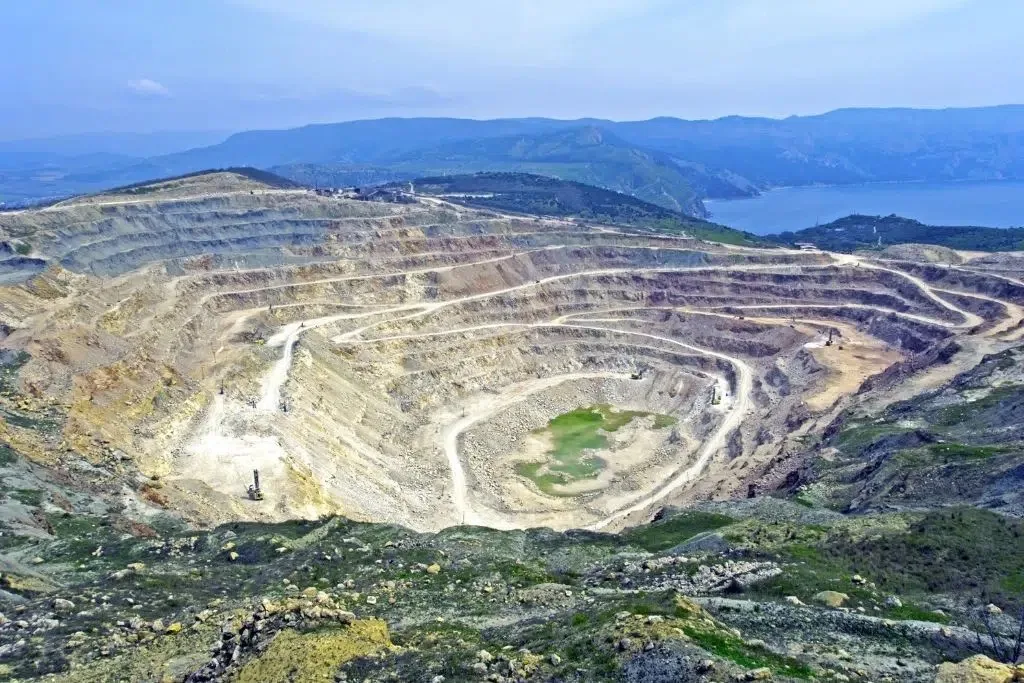

“Environmental justice is human justice. When communities don’t have clean water, when children grow up in mining-affected areas, when waste and pollution shape daily life – this isn’t just an environmental issue. It’s about dignity, health, and equality. The climate crisis doesn’t impact everyone the same. It hits hardest where resources are already limited and where voices are too often unheard. That’s why the fight for the planet is also a fight for people. Because protecting the environment means protecting lives. — Greenpeace Africa
In June we celebrate Canadian Environment Week, World Environment Day, and National Indigenous Peoples Day. Each of these celebrations reminds us of our connections to the earth and to each other. They remind us that the choices we make have far-reaching impacts, not just on this generation, but for generations to come.
Canada is a mining country – headquarters to nearly half of the world’s publicly traded mining companies and home to tens of thousands of mine sites currently under exploration, exploitation, or abandoned. GRAN’s Mining Justice Watch Group has been following and speaking out about the conduct of Canadian mining companies in their operations both at home and abroad. This Small Sip highlights the impacts of mining on the human right to water and sanitation.
Canada’s Reputation
We Canadians like to think of ourselves as the global “good guys”. We take pride in being peacemakers and the ones who respect human rights and uphold a rules-based order. However, because of the practices of Canadian mining and oil and gas companies abroad, Canada has been gaining a reputation for exploitation, environmental degradation, violence, and human rights abuses around the world.
The Right to Clean Water
Everyone has the right to water which is drinkable and easily accessible. Everyone has the right to health and to safety.
But …
What if the operations of a mining or oil and gas company threatened the fresh water source upon which your community depends?
Water and Mining
Industrial mining is an inherently destructive process that causes significant changes to both land and water, with serious implications for people living near these operations.
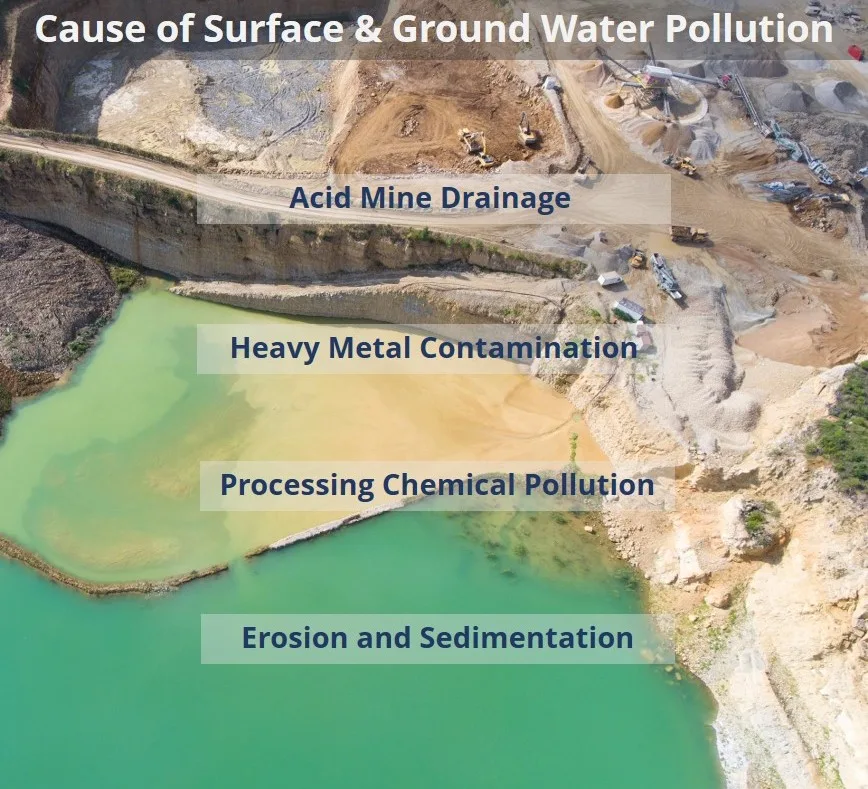
The mining industry uses massive amounts of water at every stage of its processes: during exploratory drilling, extraction, and refining. These industrial activities put tremendous strain on local water resources, often disrupting access and reducing the water available to sustain local communities, ecosystems, and regional biodiversity. Mining operations also have the potential to contaminate the sources local communities use for drinking, agriculture, fishing and other traditional livelihoods.
The large volumes of water used in mining and processing can drain local aquifers and lower the water table. Disrupted soil and cleared vegetation around mine sites can lead to high levels of sediment entering water bodies, which suffocates aquatic ecosystems and alters habitats. Mining exposes rocks containing heavy metals such as arsenic, copper, cadmium and lead. These metals can leach into local water sources making the water toxic to humans and animals. During processing of the mined ore, toxic chemicals like cyanide and sulfuric acid are used and can spill or leak into nearby water systems. Waste rock piles, such as those at coal mines, can leach contaminants like selenium into watersheds for decades. Dams around tailings ponds can fail, releasing a flood of toxic material into the environment. Even after mines close, flooding of underground works can cause toxic long-term discharges of contaminated water.
Human Rights Violations
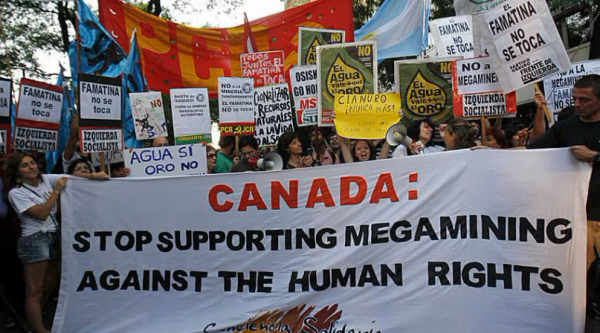
Contamination and reduced water supply are not the only hazards. There have been allegations of Canadian companies using forced labour and violating rights to health and water, as well as violating Indigenous Peoples’ right to free, prior and informed consent. Those who protest these harms and defend their rights are often harassed, violently attacked, raped, or killed. These individuals are often protecting water sources from pollution and defending communities from mining projects lacking local consent. Indigenous Peoples, women, and marginalized groups are especially under threat. Organizations such as MiningWatch Canada and Amnesty International Canada have documented these incidents and called for investigations into the violence, noting the involvement of the mining companies’ own security personnel or contracted workers in some cases. As of early 2026, reports indicate continued or worsening risk of violence and sexual violence against Indigenous women and 2SLGBTQQIA persons in particular in communities near, or affected by, large Canadian extractive projects.
Voices from the Global South
“Our health has been deteriorating, unfortunately, quite noticeably. Our livelihood has also been disappearing. Here we feel unprotected. They say it’s development, but it’s for the powerful, because we have nothing. What we’re living through is just more misery.” — Leoncia Ramos in the Dominican Republic, complainant against Canadian mining company, Barrick Mining Corp.
“Everything is contaminated, even the air. Seeing this makes me want to cry.” — Julia Catalina Chumbi, leader from the Shuar ethnic group in the southern Amazon province of Pastaza, Ecuador
“We know that water is life to people. … If we don’t lobby or if we don’t advocate, the future for our children won’t be good. So we keep on advocating so that the future of our children will be good.” Rosemary Shoko, Community Water Monitor, Zimbabwe
“The world needs Congo’s cobalt to hit net zero targets, but the energy transition is not benefiting hundreds of thousands of Congolese people living in the shadow of the big industrial cobalt mines. They are not driving EVs nor enjoying a healthy environment. Instead they are plagued by water pollution that’s making them sicker and poorer. We all need a sustainable future, but this must apply equally to those in the global North as well as to those in the DRC.” — Emmanuel Umpula, Executive Director, AFREWATCH.
“Maybe this is the culture in Canada whereby they don’t care about people?” — Thomas Muronga, Chair of the Kapinga Kamwalye Conservancy, Namibia, complainant against Canadian oil and gas company Recon Africa
What can be done?
As Canada advances a new global economic strategy, we must implement measures to ensure our companies conduct business abroad in line with Canadian values, including respect for human rights.
Canada did take steps in this direction, but has suddenly reversed course. In 2018 Canada established the Office of the Canadian Ombudsperson for Responsible Enterprise (CORE) to investigate complaints of human rights abuses linked to the overseas activities of Canadian companies. However, the office was never given the independence and powers needed to conduct investigations effectively. The government has allowed the position to sit vacant for more than a year, leaving complainants waiting for justice and at significant risk for further harm, with no word on progress on their cases.
Recent Developments…
On June 11, Prime Minister Carney announced that his government will not be appointing a new Ombudsperson and will be eliminating this office altogether. This has come as shocking news to GRAN and our partners, Mining Watch Canada and the Canadian Network for Corporate Accountability (CNCA), with whom we advocated for so many years to get the Office of the Ombudsperson established, and then continued advocating for greater powers for the role. What the government will do instead to address human rights abuses by Canadian companies operating abroad, we do not know. And what this means for the people in the Global South who trusted in the process and have been waiting to have their cases heard, we do not know either. (To our knowledge, at least 36 complaints of serious human rights abuses by Canadian companies have been in limbo while the post remained vacant, awaiting a decision from the CORE.) The Canadian Network for Corporate Accountability has issued a strong statement denouncing this decision by the government. You will find a link to it in the Dig Deeper section that follows. We encourage you to read it. Stay tuned for a GRAN action coming soon in concert with our partners. In the meantime, we encourage you to write to the Prime Minister (pm@pm.gc.ca) to ask for clarity on what his government proposes to do to hold Canadian companies accountable, and to urge Canada not to abandon those being harmed by Canadian companies operating abroad.
Dig Deeper…
- Community-based Water Quality Monitoring — Watch this 5-minute video from the Institute of Science, Technology and Policy to hear first-hand accounts from community members affected by coal mining near the Deka river in Zimbabwe.
- Indigenous Women Tour Ecuadoran Oil Field — Read about 30 Indigenous women from across Ecuador’s Amazon who participated in a “toxitour”. They visited oil fields, pipelines and gas flaring sites to see firsthand the devastating environmental and health impacts of extraction in their region.
- Canada’s watchdog post vacant as overseas mining complaints mount — To understand why it is so important that Canada appoint an Ombudsperson for Responsible Enterprise, read this clear and thorough article on the unaddressed human rights complaints currently in limbo, awaiting Canada’s response. [Note: This article was published in early June before the announcement of the elimination of the office of the Ombudsperson. It makes the case for why this role is so important.]
- CNCA Denounces the “Elimination” of the Canadian Ombudsperson for Responsible Enterprise — Read the statement from the Canadian Network for Corporate Accountability (of which GRAN is a member) in response to the government’s recent decision to eliminate this office altogether.
- Global cobalt rush drives toxic toll near DRC mines — Read this article pulling back the curtain on the global race to secure critical minerals. It is driving toxic pollution, with severe health repercussions for communities living near some of the world’s largest cobalt and copper mines.
- Land and Water Defenders Face a New Wave of Deadly Threats in Colombia — Read this report from Amnesty International as an example of the very real threats and attacks risked by those defending their land and water.
- GOING UPSTREAM: The impact of industrial mining in Canada and by Canadian mining companies abroad on the human rights to safe drinking water and sanitation — Read this report, prepared by Mining Watch Canada for the visit to Canada in 2023 of the UN Special Rapporteur on the human rights to safe drinking water and sanitation. The report details the direct impacts of industrial mining on drinking water and sanitation and provides specific examples of harms caused by Canadian mining companies operating in Canada and internationally. The report ends with six specific recommendations for action.
- Becoming a world leader in sustainable and equitable mining is an economic and moral necessity Hopeful article from the Canadian Climate Institute
