


Back to school
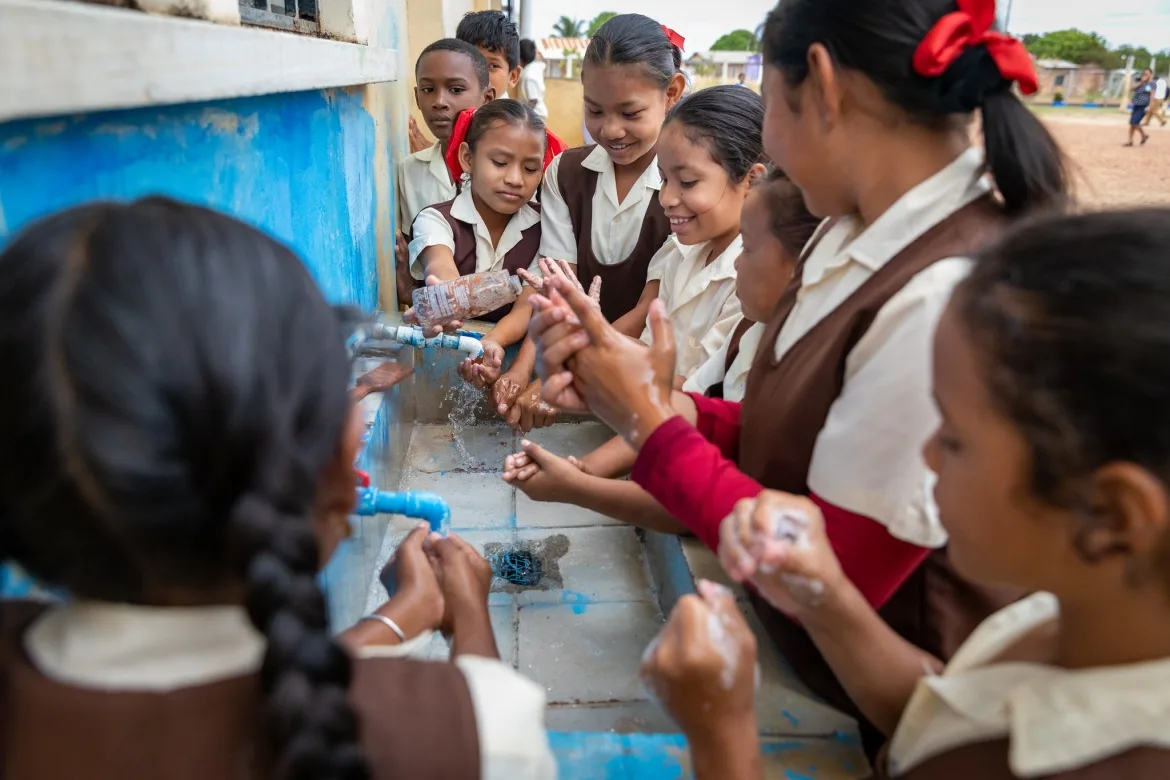
As children and young adults head back to school this month, our local store shelves are stocked with colourful pens, notebooks, backpacks, laptops, and more — all the supplies needed to support quality learning. What may have escaped your notice (because here in Canada many of us take these things for granted) is the importance of even more basic supplies: specifically, access to water that is safe for drinking, the provision of clean, functioning toilets, and handwashing stations for good hygiene. These are essential “school supplies” that are still lacking for many of the world’s children.
WASH at home
The effects of WASH on education begin before a child even leaves home.
When a water source is not available close to home, children, usually girls, are often the ones tasked with walking long distances to collect it. The hours taken up with water-collecting keep girl children out of classes. Access to a clean water source close to home means girls can stay in school.
Diseases caused by the lack of clean water, sanitation, and hygiene at home repeatedly keep children out of school, affecting nutrition, health, and learning. Access to adequate toilets, water, and soap at home reduces disease and increases children’s school attendance.
WASH at school
Every child has the right to a quality education.1 This includes access to drinking water, sanitation and hygiene services while at school. Children spend a significant portion of their day at school, where WASH services can impact student learning, health, and dignity, particularly for girls. Learning cannot flourish where basic human needs are unmet.
The WASH gap in schools around the world:
- Drinking water: Worldwide, 447 million children do not have access to drinking water at school. Nearly 1 in 4 schools, or 23 percent, lack a basic drinking water service.
- Sanitation: Worldwide, 427 million children do not have access to sanitation services that are single sex and usable at school. One in five schools – or 22 percent – do not have a basic sanitation service.
- Hygiene: Worldwide, 646 million children do not have handwashing facilities with soap and water at school. 1 out of 3 schools – or 33 percent – lack a basic hygiene service at school.
- Menstrual Hygiene: Worldwide, only 2 out of 5 schools (or 39 per cent) provide menstrual health education. Less than 1 in 3 schools (or 31 per cent) globally have bins for menstrual waste in girls’ toilets.
[Data provided by the WHO/UNICEF Joint Monitoring Programme (JMP)]
When WASH facilities are lacking in schools…
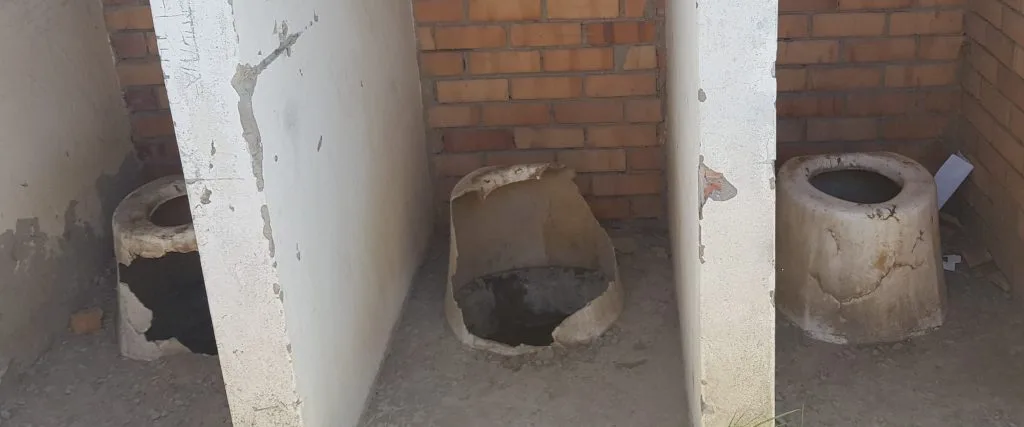
In many schools with limited WASH services, toilets may have no running water or handwashing facilities. They may be poorly maintained, unsanitary, or unsafe, and provide little privacy. A handful of toilets may be shared by hundreds of students.
And where there are no toilets at all, children have no alternative but to practice open defecation on or near the school premises. Defecating in the open is an affront to dignity, contaminates the environment, and spreads disease. Open defecation around schools creates risks to children’s safety, health, and nutrition.
The absence of safe drinking water in schools can lead to dehydration for students, significantly impacting their ability to learn. Being underhydrated can adversely affect memory, attention span, and problem-solving abilities.
Millions of school days are lost every year because of illnesses caused by lack of access to clean water and adequate sanitation.
A further consequence that you may not have considered: schools without adequate water, sanitation and hygiene facilities find it difficult to recruit teachers.
Then along comes puberty…
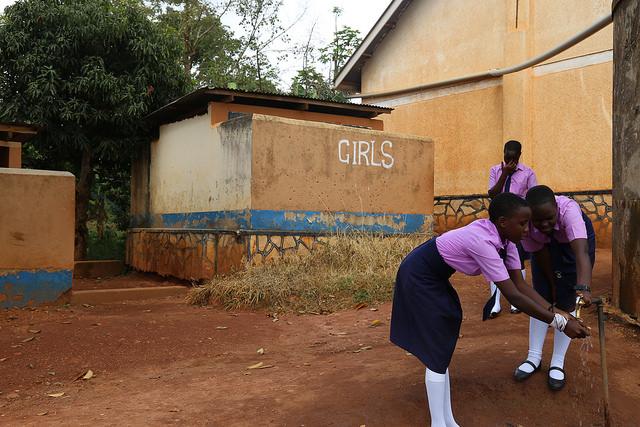
Access to WASH is crucial for adolescent girls to be able to take care of their menstruation safely, hygienically, and with dignity. Girls need somewhere private, clean and secure to change their sanitary cloths at school, somewhere with clean water and soap, and a place to dispose of used materials safely. Provision of these essentials means girls can attend school while menstruating. If their school has no toilets or handwashing facilities to support proper menstrual hygiene, many girls must stay home during their periods, regularly missing out on classes and, for some, eventually dropping out altogether.
If toilets are available at school, there is still the question of accessibility and privacy. In developing countries, the lack of separate toilets for girls and boys is among the top barriers to girls’ education. When a girl reaches puberty, access to a gender-specific toilet can be the decisive factor as to whether she continues with her education.
The benefits
It is a simple, commonsense fact: Access to clean water, toilets, and handwashing facilities in schools leads to better health and education outcomes. Adequate WASH facilities reduce disease and environmental pollution, increase privacy, safety, and dignity for students, and improve school attendance and academic performance. And children who learn about safe water, sanitation and hygiene practices at school take those lessons home to reinforce healthy lifelong habits in their families and communities. When children have access at school to clean water, safe toilets, and soap for handwashing, they have a supportive environment in which to learn and realize their full potential. This is the human right of every child.
What can Canada do?
For too long WASH has been overlooked and underfunded. This is something Canada can do something about. Clean water, toilets, soap, and hygiene education are not expensive investments. We know what needs to be done and have the means to do it.
Canada can increase investment in WASH projects as part of our International Assistance budget. Investing in water, sanitation and hygiene (WASH) is one of the highest-return investments a government can make. Access to WASH saves lives, cuts health costs, creates employment opportunities, unlocks productivity and learning, reduces inequalities – especially for women and girls – and protects ecosystems, while strengthening climate resilience. It is a “no regrets” investment that pays multiple dividends.
Canada can choose to become a global champion for WASH. We can start by showing real commitment and leadership at the upcoming UN Water Conference in December 2026, putting forward a workable plan to improve access to WASH in schools and in health care facilities worldwide. Plans alone will not create the change that is needed. The concrete actions needed to drive real progress for WASH require financing.
Dig Deeper…
- Join us for a webinar focused on education and WASH on Thursday, September 24 at 1:00 p.m. ET — From Challenge to Change: Water, Sanitation and Hygiene in Rural Ghana — with guest speaker Peta Hall. Click here to register.
- Education Starts with Clean Water 2-minute video from WaterAid
- How Can Toilets Promote Education? Blog post from the Global Partnership for Education
- Water Access Reshapes Education for Rural Zimbabwean Pupils Blog post from the Global Partnership for Education
- Bathrooms and Girls’ Education in Africa Article from the Borgen Project
