


Climate Change
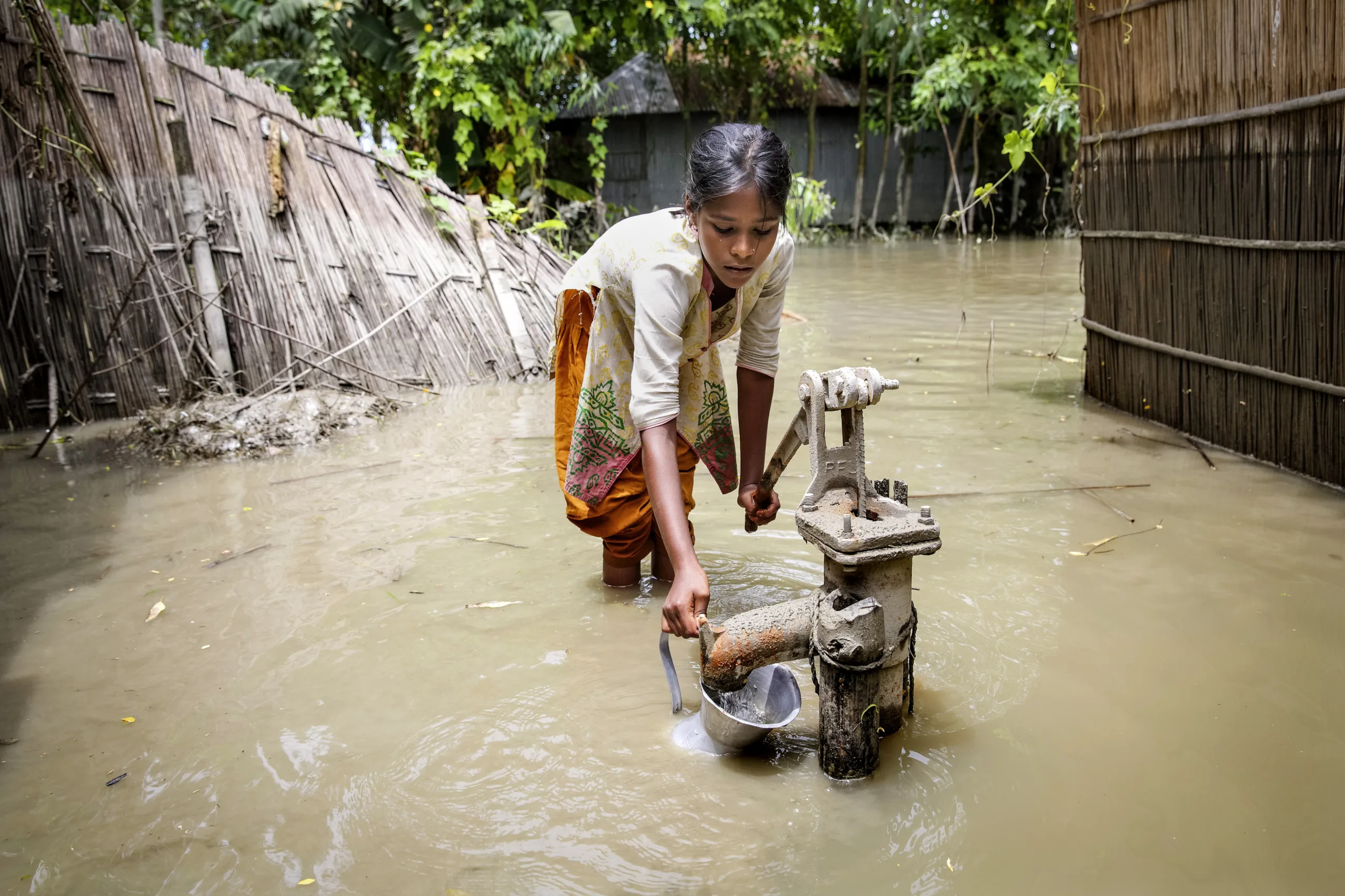
The climate crisis is a water crisis. Climate change is affecting water cycles and weather patterns and increasing the frequency and intensity of storms and droughts. According to the UN Office for Disaster Risk Reduction (UNISDR), in the past 20 years, over 90% of major disasters worldwide have been weather-related, caused by floods, storms, heatwaves, droughts, wildfires, and other intense weather events.1 These extreme weather events lead to death, injury, loss of livelihoods, and displacement, and place a huge burden on societies, economies, and the environment. In the midst of all these grim consequences, what are the specific implications for WASH?
Impacts of Climate Change on WASH
It will come as no surprise that climate change has a tremendous negative impact on water, sanitation and hygiene services (WASH). For the millions of people around the world who were already struggling to get clean water, climate-related shocks are making it even harder.
Consider the challenges:
- Reduced availability of water for drinking, for sanitation systems, and for personal hygiene (handwashing/bathing).
- Reduced quality of water as the concentration of contaminants increases as surface and groundwater sources shrink.
- Reduced accessibility of water, with more time spent hunting for water, longer distances walked, and more vulnerability to sexual and gender-based violence en route.
- Reduced affordability of water. Water scarcity leads to an increase in the costs of water, which can lead to inequitable access.
- Storm damage to water supplies and sanitation infrastructure.
- Flooded sewerage systems that contaminate water sources and the environment.
- Sea level rise and tidal flooding contaminate freshwater resources with salt, making them undrinkable for people in coastal communities.
- Challenges to public health from the spread of water-borne illnesses.
- Conflicts can arise within and between communities over competition for scarce water resources.
The specific impacts of climate change are unique to each region, each community, and even to each individual. Marginalized groups – such as women, people with disabilities, sexual and gender minority groups and low-income households – face compounded vulnerabilities due to social and economic disadvantages, making them disproportionately affected by climate hazards. To create resilient and inclusive WASH systems, the needs and voices of these groups must be integrated into planning and decision-making.
What is needed?
People need a safe and sustainable supply of water that can keep pumping through flood, drought, and natural disaster. They also need safely managed sanitation systems that will not contaminate local water supplies and the environment in times of flooding. Adapting and strengthening local WASH systems to withstand climate-related challenges and recover after catastrophic weather events is essential for communities to survive and thrive. The good news is, this is doable. However, addressing the impacts of climate change on WASH requires more than resilient infrastructure; it demands system-wide transformation backed by political commitment and sustained financing. Achieving climate-resilience in national WASH systems depends on how quickly and effectively countries can move from planning to implementation.
A critical element to enable this transition is climate finance. Despite the clear links between water, sanitation, and climate adaptation, WASH remains significantly underfunded within global climate finance mechanisms. Governments and development partners must increase and prioritize adaptation finance for WASH, ensuring that resources are accessible, predictable, and aligned with national climate plans such as the Nationally Determined Contributions (NDCs) and National Adaptation Plans (NAPs).
What do Climate-Resilient WASH systems look like?
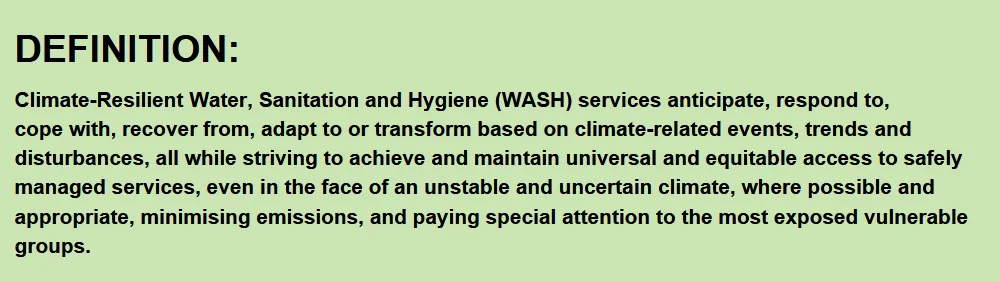
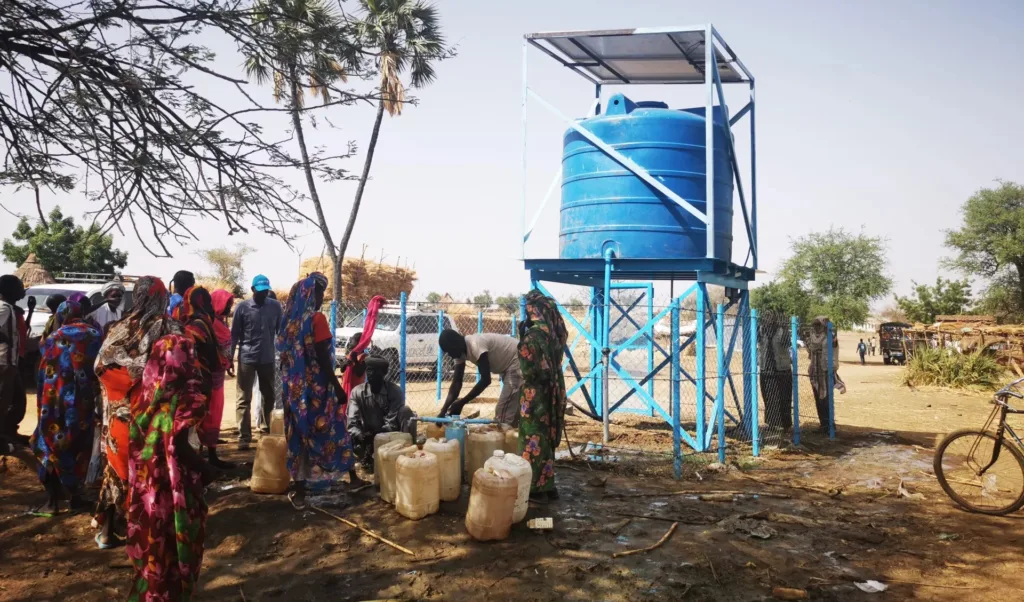
Just as the impacts of climate change are unique to each region and community, so must climate-resilient responses be. There is no one-size-fits-all answer. Identifying climate threats to infrastructure, services, and communities is the first step to addressing them. Once identified, there are strategies and technologies available to adapt and strengthen WASH systems. Key climate-adaptation technologies include flood-resistant latrines, solar-powered water pumps and purification and desalination systems, rainwater harvesting tanks and elevated storage systems, and decentralized, nature-based wastewater treatment.
But technology alone is not enough. It is why we speak of WASH systems, not just WASH infrastructure. WASH systems refers to all the social, technical, institutional, environmental and financial factors, actors, motivations and interactions that influence WASH service delivery in a given context.2 Strengthening the resilience of WASH systems is not only about building infrastructure to withstand weather events. It’s about strong government leadership, well-functioning and accountable institutions, sufficient financing, reliable data and updated plans, capacity-building, leadership, and ownership by local communities, and strategies to address deeply ingrained gender and social inequalities. A climate-resilient WASH system is all of this and more.
Dig Deeper…
- Join us this coming Wednesday, Earth Day, April 22 at 1:00 p.m. ET for a GRAN webinar: From Risk to Resilience: Strengthening Communities through Climate-Resilient WASH. Our guest speaker will be Adnan Qader, Manager for Water Governance and Resilience at WaterAid Canada. If this Small Sip has prompted some questions for you, bring them to our discussion on Wednesday. You can register here.
- Watch “First Cup“, a joyful 1-minute video from WaterAid.
- Watch this 4-minute video from UNICEF on Climate-Resilient WASH projects in Vietnam.
- Watch this 5-minute video from WaterAid to better understand what it takes to strengthen systems for universal, sustainable, and safe water, sanitation and hygiene.
- Read about the Golap Mohila Dal’s Moricchap Drinking Water Plant in Bangladesh, a good news story about women’s leadership, community engagement, and entrepreneurship in the service of climate-resilient WASH.
