

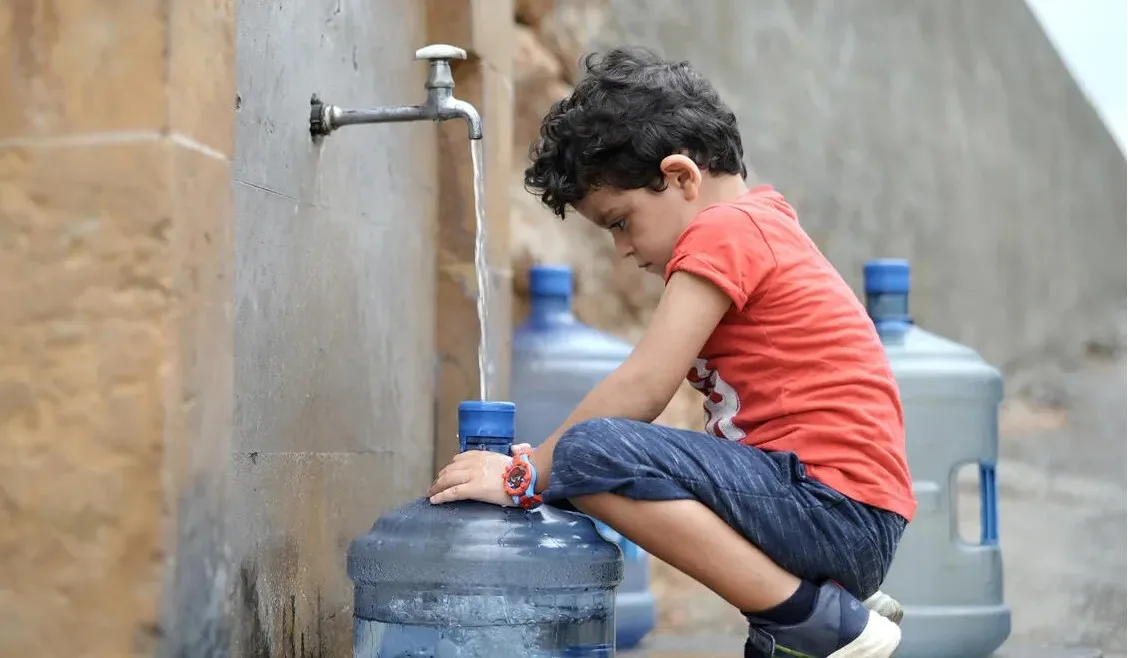
Water infrastructure has become increasingly and deliberately targeted in modern warfare as a strategic tactic, even though the Geneva conventions specifically prohibit attacks on water installations and other objects that are critical for people to survive. Using deprivation of water as a method of warfare is outlawed. Any intentional deprivation of water or obstruction of aid may constitute a war crime.
In the recent military operations in the Middle East, water and sanitation infrastructure is being threatened, targeted, and destroyed.
Earlier this month Iran accused the U.S. of attacking a desalination plant on Qeshm Island, disrupting the water supply to 30 villages. And President Trump has just renewed his threat to “blow up” a range of civilian infrastructure in Iran, including all of the country’s desalination plants, in a move that would threaten the water source for millions of people. (Gulf countries rely heavily on desalination for their freshwater needs.)
Yusra Suedi, Assistant Professor in International Law at the University of Manchester, said Trump’s threat “reinforces the climate of impunity around collective punishment in warfare. This is clearly an act of collective punishment, which is prohibited under international humanitarian law. You can’t deliberately harm an entire civilian population to pressure its government.”
And in Lebanon, humanitarian and human rights organizations are sounding the alarm on the weaponization of water by Israeli military operations in that country. Oxfam reports that Israeli forces are destroying civilian water and sanitation infrastructure, including strikes near sites that were being rehabilitated after having been destroyed or damaged in the last war. Oxfam fears catastrophic consequences for the people of southern Lebanon. Without access to clean water, the risks are immediate. Disease spreads quickly, and people who have already been displaced are pushed into even more precarious conditions. Read Oxfam’s full statement here and watch this 4-minute interview on CTV news with Diana Sarosi from Oxfam Canada.
For those who wish to support humanitarian aid for children and families caught in the recent conflicts in the Middle East, Canada’s leading international aid organizations – joining forces as the Humanitarian Coalition – are raising critical funds to rush life-saving assistance to people in need in Lebanon, Syria and across the wider region. Click here to see what their member agencies are doing now to respond to the emergency in the Middle East. Tiffany Baggetta, Executive Director of the Humanitarian Coalition, says: “We are deeply alarmed by the escalating military violence that is shattering lives throughout the region. Humanitarian needs are rising by the hour. We are urgently calling on the generosity of Canadians to donate today to support life-saving humanitarian aid for children and families caught in this conflict.” Donations can be made at together.ca or 1-855-461-2154.
To learn more about the weaponization of water in modern warfare, read this Earth.org article, From Lifeline to Strategic Weapon: How Water Infrastructure Becomes a Target in Armed Conflicts.
